IUFE in International Dialogue with Patricia Elias | What role do women play in peace negotiations, and why is their participation essential for lasting peace?
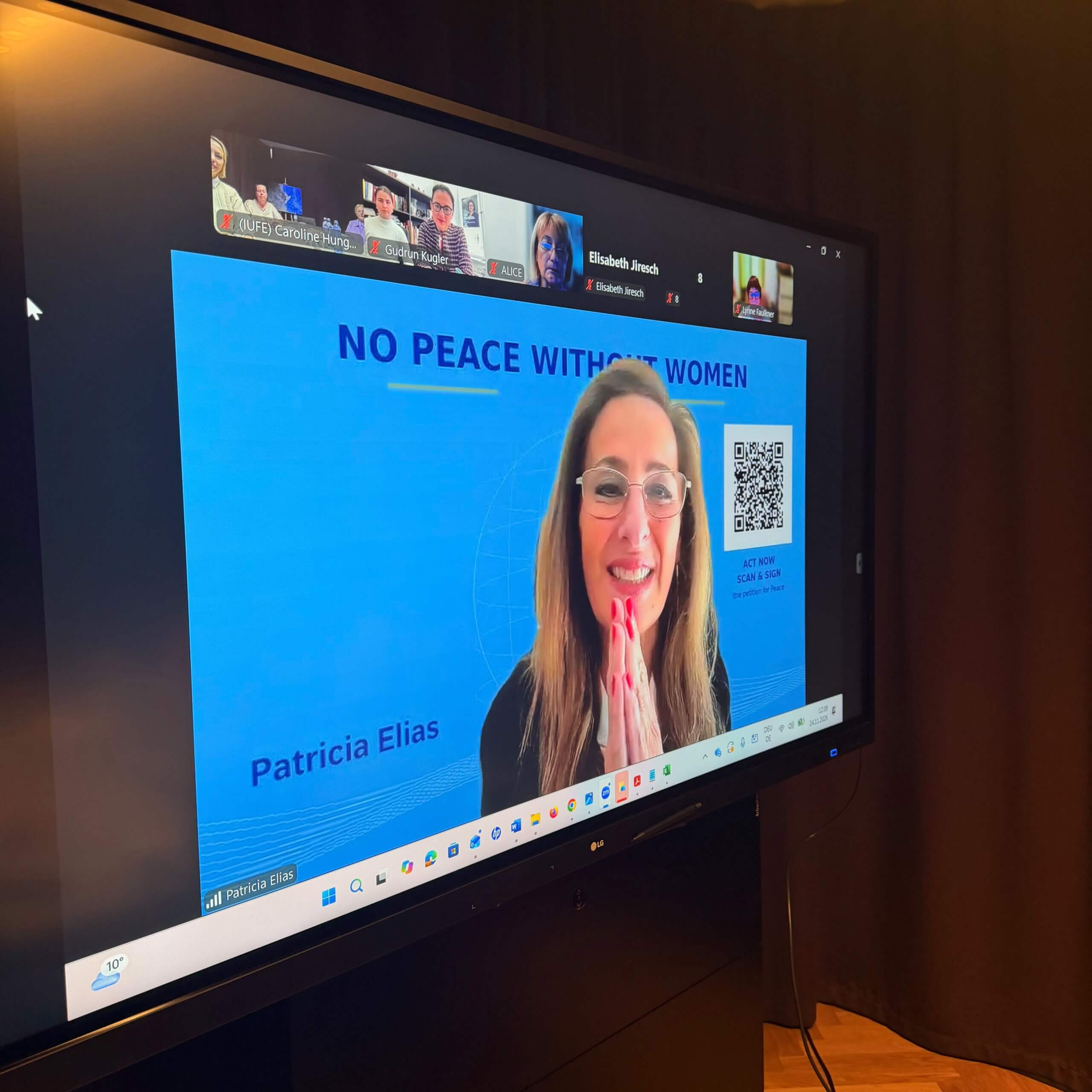
On 24 November 2026, we hosted an international online discussion with Patricia Elias, former UN Women adviser, international lawyer and founder of the “No Peace Without Women” initiative.
Under the title “No Peace Without Women – What Difference Do Women Make in Peace Negotiations?”, we brought together representatives of international women's organisations, policymakers and experts in peacebuilding to discuss women's participation in peace processes and the challenges they face in conflict situations.
The conversation focused on a central question: How can the international community ensure that women are not only protected during armed conflicts but are also actively involved in negotiating and shaping peace?
Women as Equal Partners in Peace Negotiations
Patricia Elias presented her international initiative “No Peace Without Women”, which advocates for the equal participation of women in peace negotiations and political decision-making.
Drawing on scientific research, Elias highlighted the relationship between women's participation in peace processes and the durability of peace agreements. Despite growing evidence of their important contributions to conflict resolution, women remain significantly underrepresented at formal negotiating tables.
A key reference point was UN Security Council Resolution 1325 on Women, Peace and Security, adopted in 2000. The resolution calls for the greater participation of women in peace and security decision-making and recognises their essential role in conflict prevention, conflict resolution and peacebuilding.
More than 25 years after its adoption, however, the implementation of these commitments remains a major challenge.
Protecting Women in Armed Conflicts
Another important topic was the devastating impact of armed conflicts on women and girls.
Patricia Elias addressed the widespread use of sexual violence as a weapon of war, referring to situations in Sudan, the Democratic Republic of the Congo and Afghanistan.
She emphasised the need for stronger international accountability, more effective prosecution of conflict-related sexual violence and greater protection for women and girls affected by armed conflict.
The discussion also highlighted the importance of international cooperation and the need to strengthen legal and political mechanisms to prevent violence against women.
From International Dialogue to Concrete Action
Beyond examining current challenges, our conversation focused on how international initiatives can gain broader political and public support.
Patricia Elias introduced the “No Peace Without Women” petition, which calls for women's equal representation in peace negotiations and seeks to bring this demand to the attention of the United Nations.
Participants discussed opportunities for international cooperation, political advocacy and stronger networks between women's organisations, civil society and public institutions.
A particularly valuable perspective came from a Ukrainian parliamentarian, who shared her personal experience of participating in peace negotiations and emphasised the importance of ensuring women's representation in future peace processes.
The exchange demonstrated that international networking can help connect practical experience, scientific knowledge and political initiatives.
Connecting Research, International Exchange and Peacebuilding
At IUFE, we believe that sustainable peace requires both a sound understanding of the challenges facing our societies and the willingness to translate knowledge into action.
International dialogue is therefore an essential part of our work. By bringing together experts, policymakers and civil society representatives, we aim to encourage the exchange of ideas, strengthen cooperation and contribute to new approaches to peacebuilding.
Our conversation with Patricia Elias offered valuable insights into the Women, Peace and Security agenda and highlighted opportunities for further international cooperation.
We sincerely thank Patricia Elias and all participants for their contributions, their commitment and the inspiring exchange.
The central message of our discussion was clear: Women must have a seat at the table where peace is negotiated. Lasting peace cannot be achieved without their voices, experience and leadership.